You walk past someone who’s just put on sun cream, and suddenly you’re twelve again, back on that beach. Sand between your toes, an ice cream melting faster than you can eat it. Nobody asked you to think about that holiday. Your nose did it for you, and within a second, you were there.
Why scent gets there first
What you see and hear travels first through a relay station deep in your brain, the thalamus. A scent signal doesn’t have to take that detour. It arrives straight in the areas that handle emotion and memory, including the amygdala (Gottfried and Zald, 2005). In 2025, Stenwall and colleagues showed that this route works the same way in the human brain.
Smelling isn’t actually faster than seeing: consciously recognising a scent takes about a second. What makes scent different is where the signal lands, right in the middle of the areas for feeling and memory.
Aromatic anchoring: how it works
You link one fixed scent to a moment or a feeling, and you do that again and again. After a while, the scent alone is enough to bring that feeling back. A memory stick, basically: you save with a scent, and you retrieve with that same scent.
In a study by Rachel Herz (1997), people learned word lists while a scent hung in the room. Two days later, they recalled more words when the same scent was there again. Björn Rasch and colleagues went a step further in 2007, in a study published in Science. Their participants smelled a scent while learning something, then smelled that same scent again during deep sleep. Afterwards, they remembered what they’d learned better.
Which scent works for you is personal. It depends on what you’ve experienced with it, and on what you simply like the smell of (Herz, 2016). Learning something new, and that can just as easily be a new, healthy habit, is exactly where you can put this effect to work. Pick a scent that makes you happy. For me, lately, that’s most often Adaptiv.
At work: scent for your head
Focus. In studies by Mark Moss and colleagues (2003 and 2008), people who smelled rosemary or peppermint did better on memory tasks and felt more alert. In the same studies, lavender and ylang ylang had the opposite effect, slowing people down. Save those for the evening instead, for winding down.
Switching between tasks. Pick one fixed scent for every changeover moment. Fill in your parking sheet, take a deep breath, and start the next task. After a few weeks, your head will know: this scent means the last task is parked. I like to use something like Peppermint for this.
Download the free parking sheet →
Winding down. Lavender at the end of your working day. In a review of 65 studies, Donelli and colleagues (2019) found that people who smelled lavender reported less tension and unease.
If you work in an office, don’t run a diffuser in a shared space. Not everyone tolerates scent equally well. A drop in your palm or a personal inhaler works just as well as an anchor. At home, at your own kitchen table, you can leave the diffuser running.
How long should you run the diffuser? If you’re using a scent for a specific effect, like focus or calm, run the diffuser for a maximum of one hour, then switch it off. Your nose gets used to a scent fast, and for an anchor you want to keep noticing it. The Laluz has a one-hour setting built in; the Petal’s shortest setting is two hours, so you switch that one off yourself after an hour.
If you just want a house that smells good, the diffuser can run longer. After a while you probably won’t smell it yourself any more, but your guests will. Expect compliments.
For the person you want to be
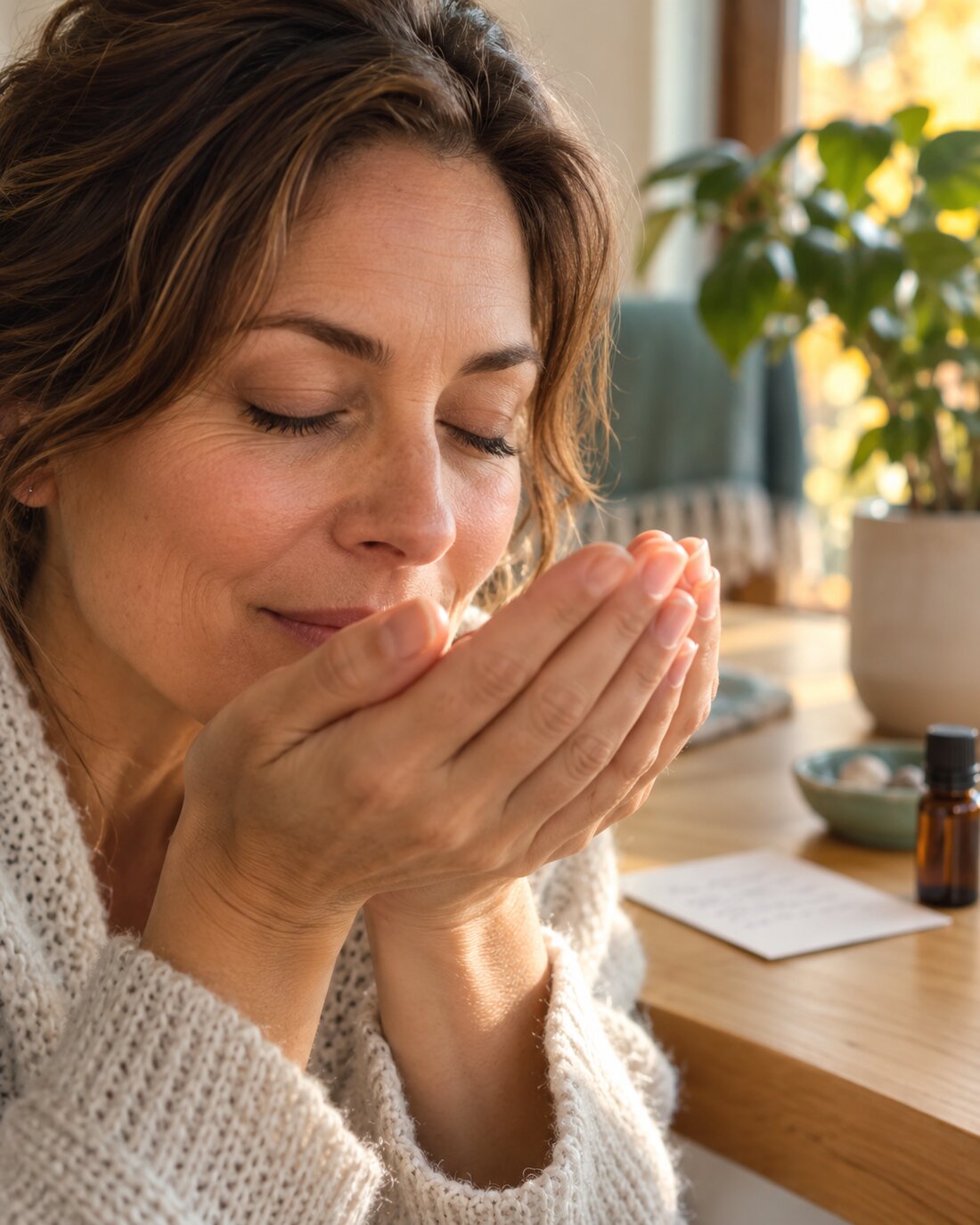
This is where scent gets really interesting. In my tidying blog, I wrote about the old sentence and the new one: from ‘I’m just not a tidy person’ to ‘I’m someone who finishes one thing every day.’ Add scent, and that new sentence becomes something you actually feel in your body.
The exercise works like this:
- Write down your new sentence. Small, and something you can actually make true.
- Choose one blend that belongs to this sentence only.
- Smell the blend and say your sentence out loud. Do that at fixed moments every day, say, in the morning and in the evening before you brush your teeth. That way you tie the exercise to something you already do.
- Keep it up for a few weeks. After that, the scent alone is enough to remind you who you’re becoming.
A few examples: Motivate with ‘I’m someone who finishes things’, Cheer with ‘I choose what makes me happy’, Adaptiv with ‘I stay calm when things get busy.’
Here, two pillars of GOOD. meet: the O of natural support, and the dot, the turning point.
You hear people say it all the time: ‘That’s just how I am.’ As if who you are is fixed somewhere. I see it differently. What you think drives what you do, and what you do decides where you end up. You get to choose both of those. That’s what I mean by the turning point: the moment you decide who you want to be, and then make that true, bit by bit, every day. You choose change, and a renewed version of yourself.
Scent helps you hold on to that choice, especially on the days you’re about to slip back into your old sentence.
What research shows about becoming a new version of yourself
Mental practice counts too. In a well-known study by Alvaro Pascual-Leone (1995), people practised a piano piece for five days. One group actually played; the other group only practised in their head. In both groups, the brain area that controls the fingers changed in the same direction. A review of dozens of studies shows that mental practice genuinely helps, although less than the real thing, and that the effect fades within a few weeks if you don’t follow through (Driskell and colleagues, 1994). Feeling your new sentence every day therefore works best when you also do something small with it, every day.
Self-image and behaviour reinforce each other. People who see themselves as someone who exercises, exercise more (Rhodes and colleagues, 2016). It works both ways: the more someone exercises, the more they start to see themselves that way too. That’s exactly why starting small is so powerful. Every time you make your new sentence true, it becomes a little more true. Psychologist Daphna Oyserman had teenagers draw up a concrete picture of who they wanted to become, with a plan attached. Two years later, they did better at school than the group that hadn’t done the exercise (Oyserman and colleagues, 2006).
Believing you can grow. Carol Dweck calls this a growth mindset: people who believe skills can grow find it easier to keep going. Fair’s fair: in larger, later studies the effect turned out smaller than the original story suggested, and it mainly helped people who were already struggling (Yeager and colleagues, 2019; Sisk and colleagues, 2018). So treat it as a starting point. Believing you can change helps you begin; the small daily step does the actual work after that.
Whether saying your sentence out loud adds anything extra on its own has never been studied separately. I do it anyway, because then you’re not just thinking your sentence, you’re hearing it too, and that makes it more concrete for me.
How your old beliefs act as a filter for what you notice and who you think you are, your paradigm, is something I wrote about in detail in my blog about the silver Teslas.
Read the blog about your paradigm →
Make your own scent anchor card
Write your new sentence, choose your blend and your colour, and download your card: one to print for your mirror or desk, and one as a wallpaper for your phone. That way you see your sentence every time you pick up your phone.
Make your own card
Write your new sentence, pick the scent that goes with it and your image. You'll get a card to print and a background for your phone.
Just for the scent of it
Scent doesn’t always have to be for something. Sometimes you want a house that smells good when you walk in.
- Morning: Citrus Bliss.
- Tidying up: Motivate.
- Grey afternoon: Cheer.
- Windows shut in winter: Air-X.
- Bedroom: Air.
- Evening: Serenity, or Lavender with Cedarwood.
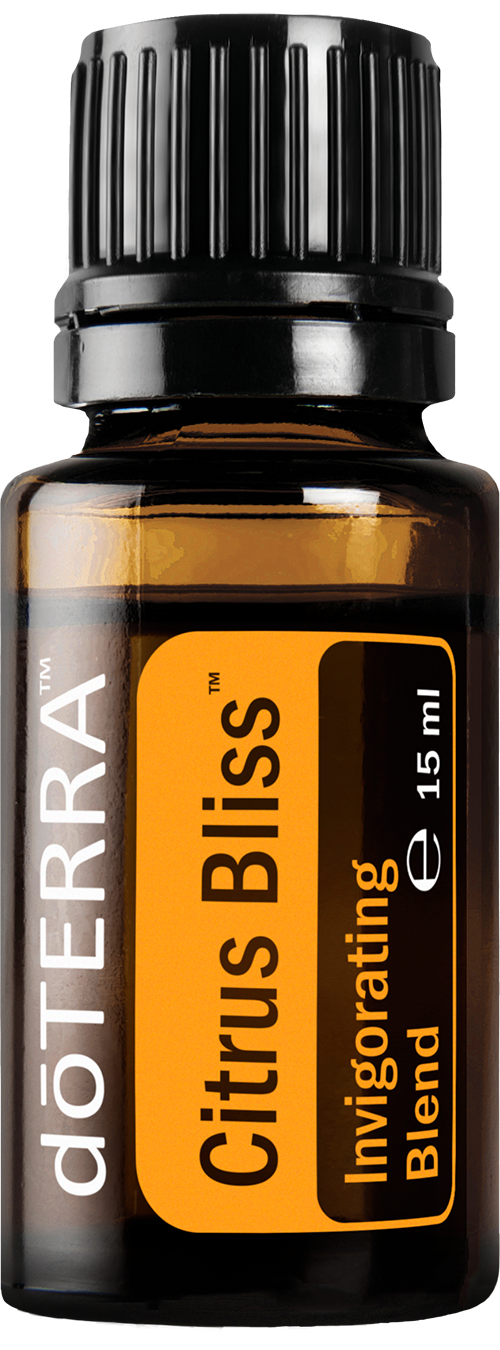 Citrus Bliss
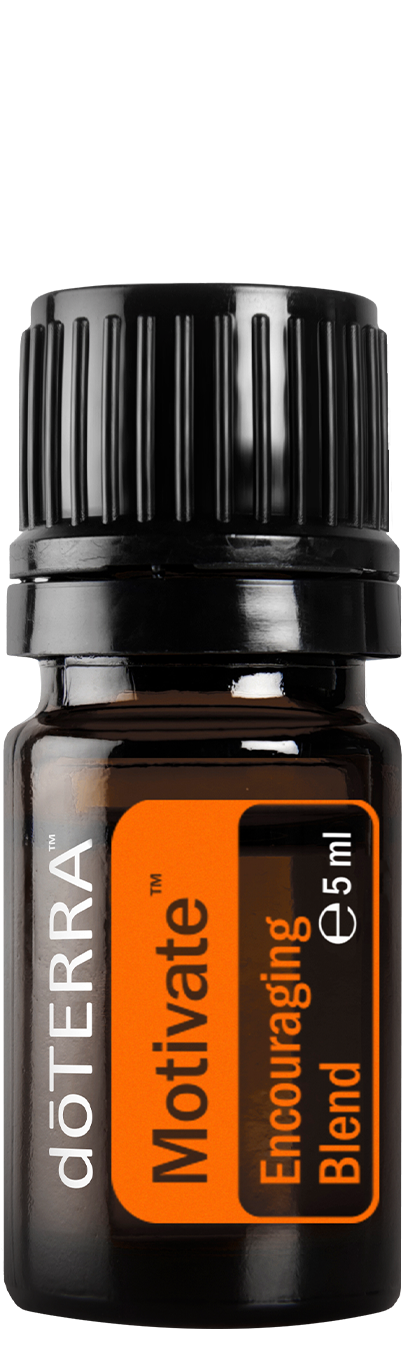 Motivate
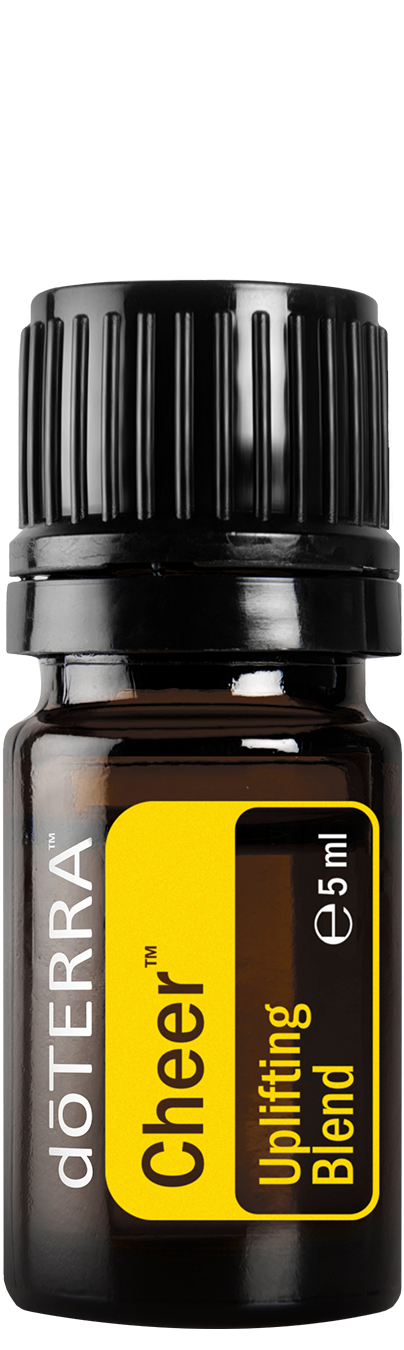 Cheer
Cheer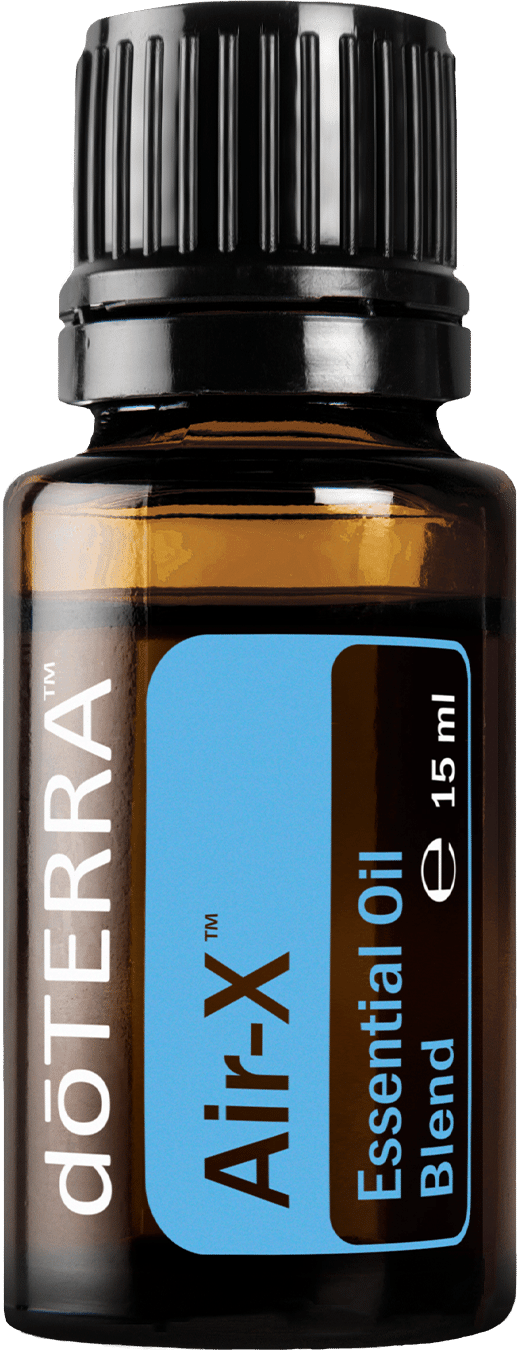 Air-X
Air-X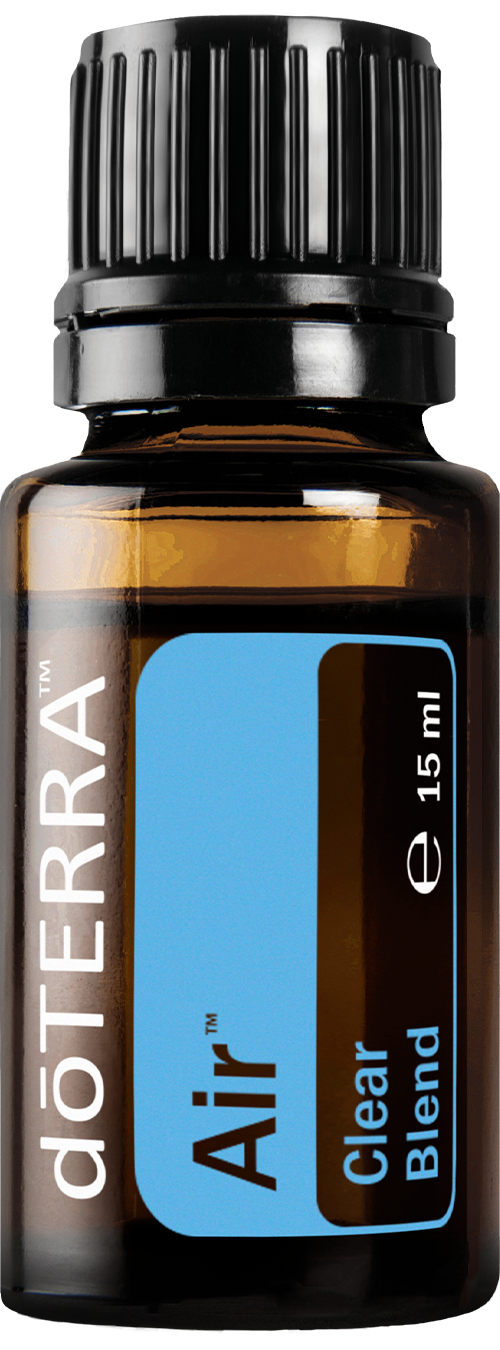 Air
Air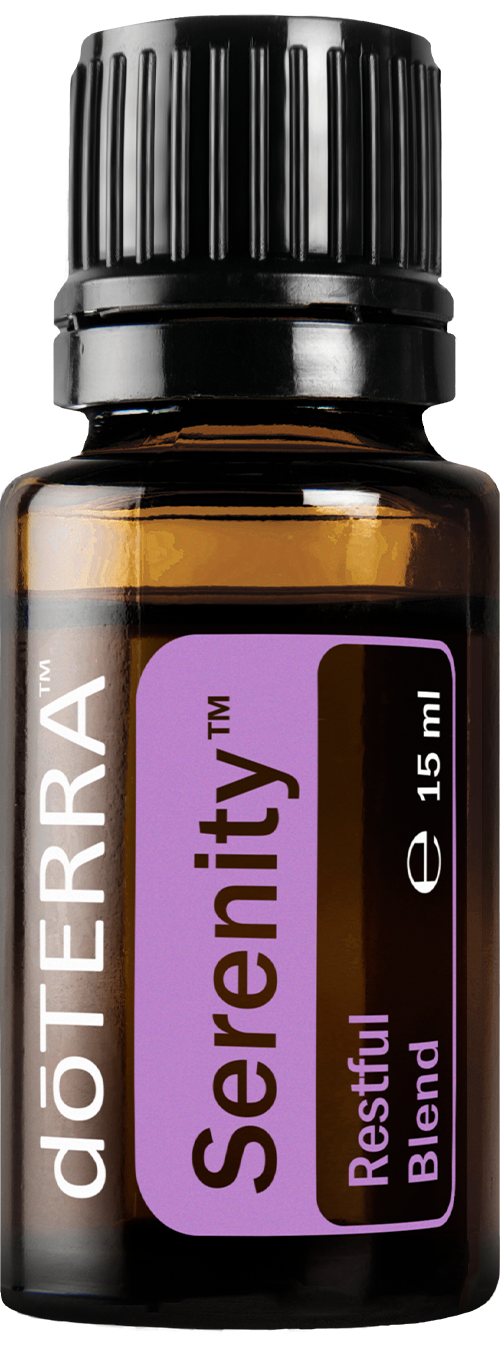 Serenity
You’ll find every blend, with the number of drops, in the free diffuser guide.
Download the free diffuser guide →
Synthetic or natural?
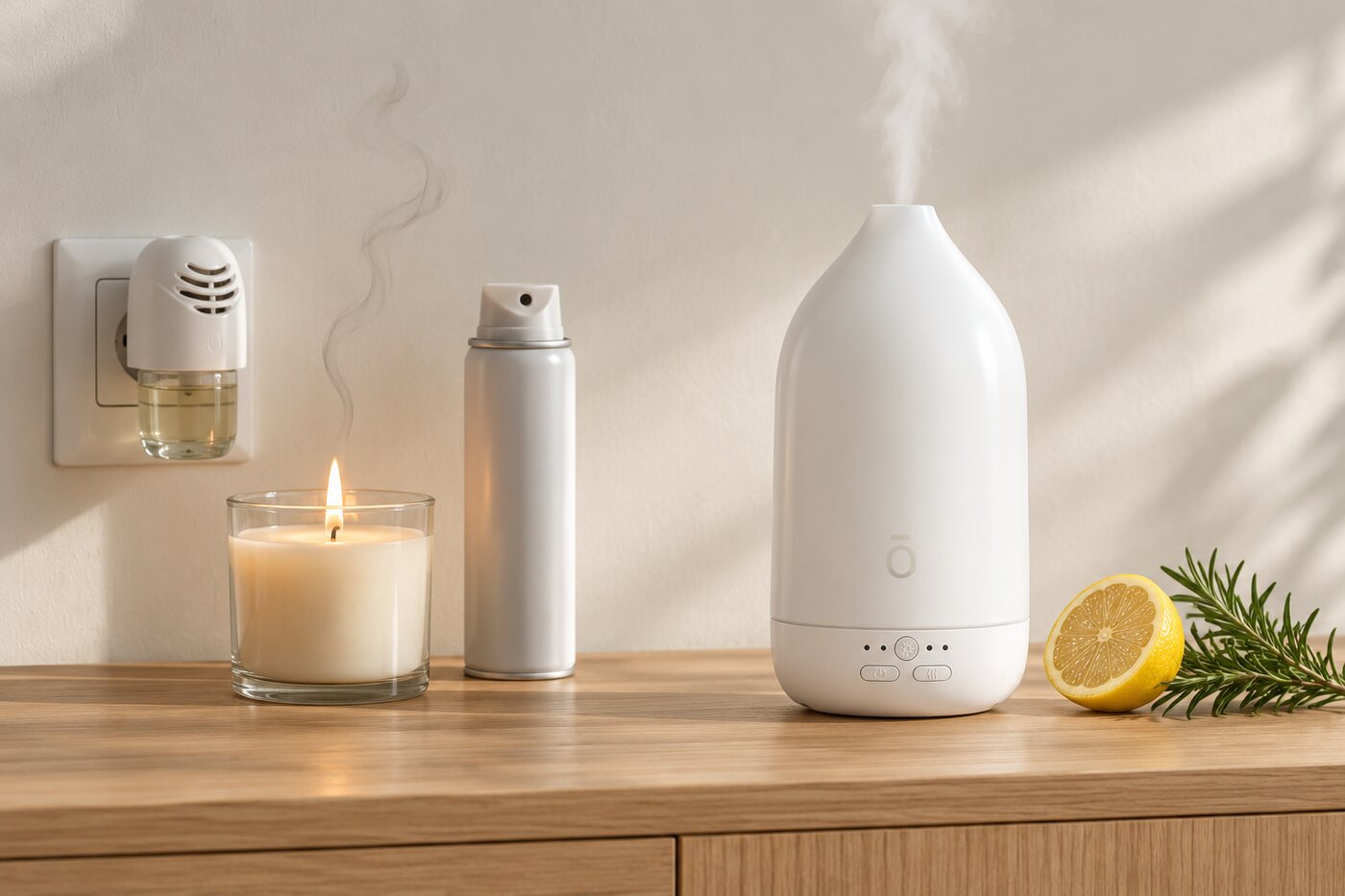
A scented candle, a plug-in, an air freshener: they all smell of something, and often you have no idea what. The label just says one word: ‘fragrance’. Behind that word, there can be a whole mixture hiding.
Environmental scientist Anne Steinemann measured what scented products actually release into the air. In one of her studies, only 5% of the 684 substances she found were listed on the label, the safety data sheet, or the product’s website. Products with ‘green’, ‘organic’ or ‘natural’ on the packaging didn’t score any better in her measurements. And a burning scented candle releases soot and fine particles.
Essential oils aren’t automatically harmless either; they release volatile compounds too. For me, the difference comes down to three things. I know which plant is in the bottle. I decide how much and when. And my diffusers work with water instead of heat: in a 2025 study, an ultrasonic diffuser stayed under the European limit values, while a heat-based diffuser didn’t.
That’s why I go for natural: a few drops I know, at a moment I choose, rather than a synthetic scent pumping out of a plug socket all day long.
A few house rules: use the timer, open a window now and then, make sure pets can leave the room, and it’s best not to run a diffuser in a room with birds.
The diffusers I use
I use two. The Petal is light and simple, and it’s the one I switch on most often. The Laluz has a glass top and three light settings, pretty enough to leave out on display.
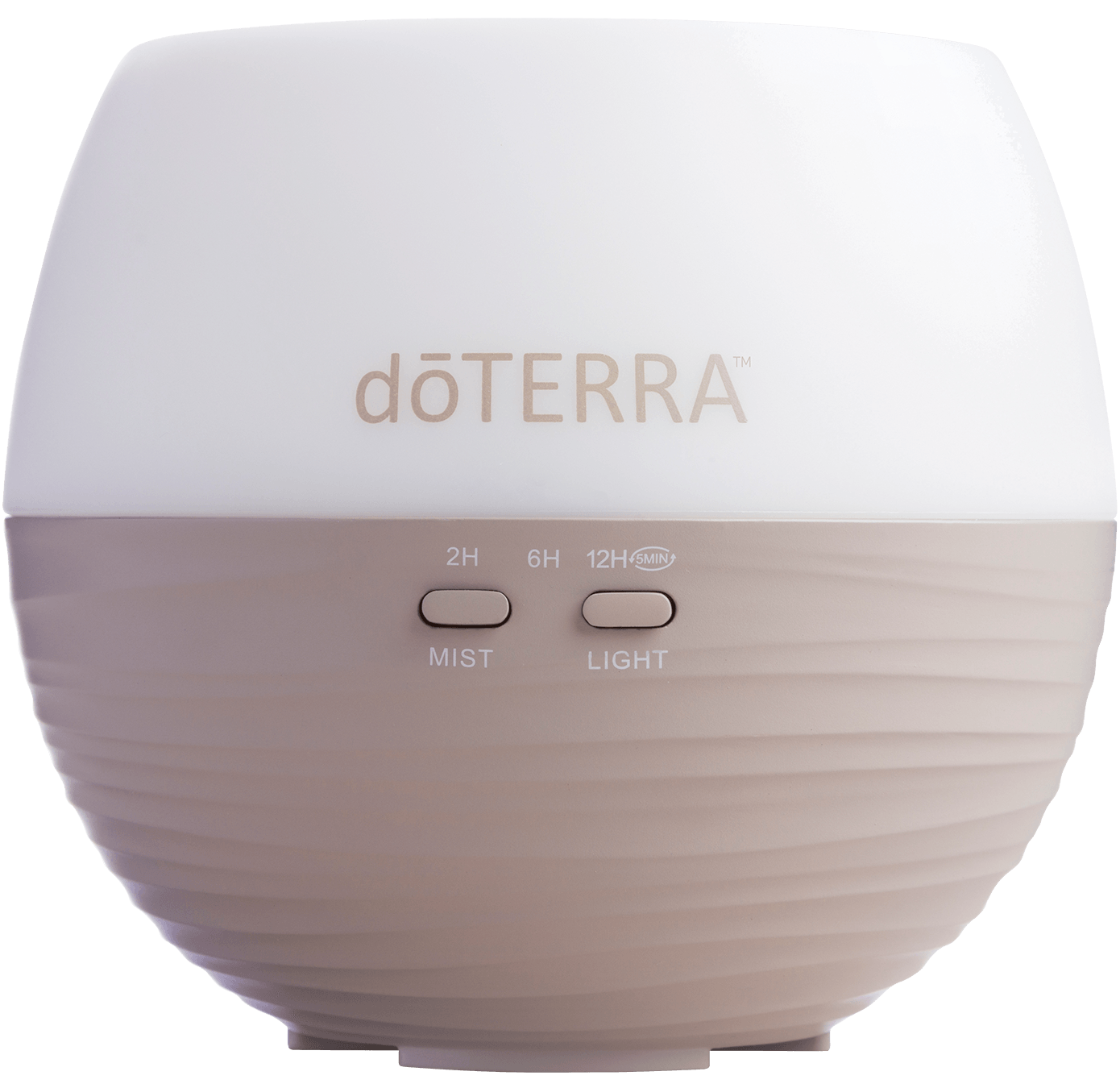 Petal Diffuser 2.0
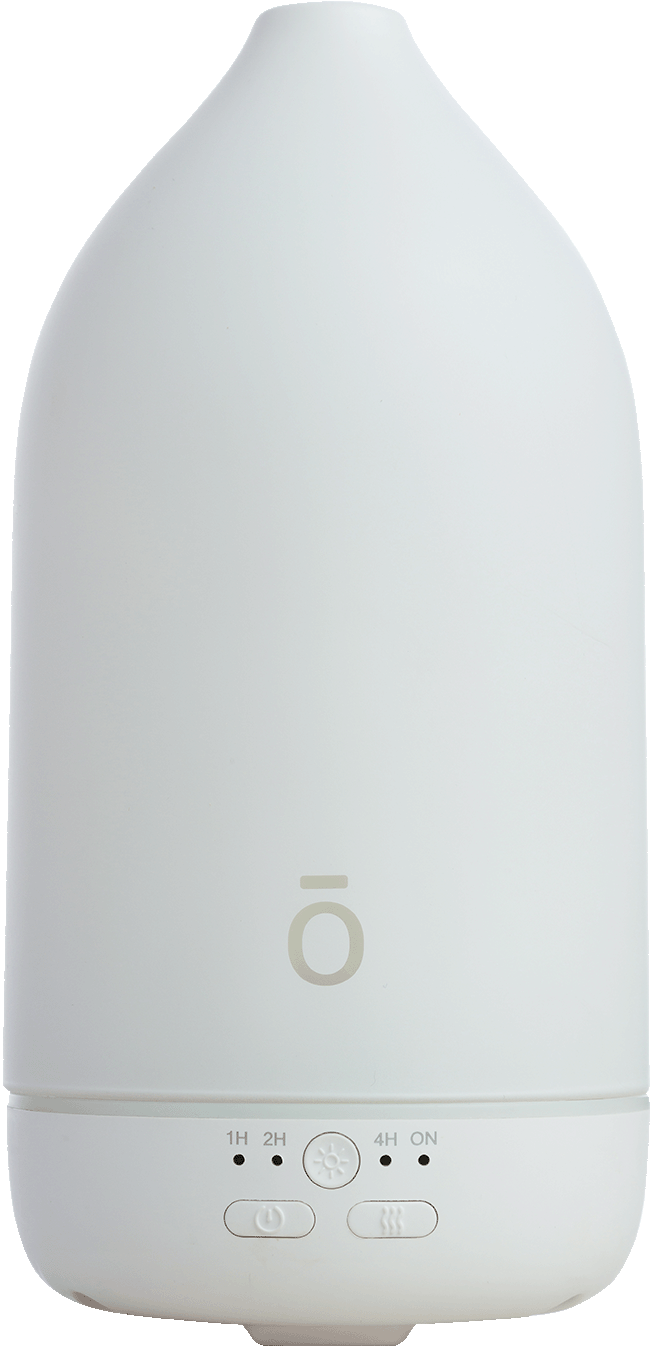 Laluz Diffuser
Sources
- Gottfried, J. A., & Zald, D. H. (2005). On the scent of human olfactory orbitofrontal cortex: meta-analysis and comparison to non-human primates. Brain Research Reviews, 50(2), 287-304.
- Stenwall, A., e.a. (2025). Brain Sciences (PMID 40309830).
- Herz, R. S. (1997). The effects of cue distinctiveness on odor-based context-dependent memory. Memory & Cognition, 25(3), 375-380.
- Rasch, B., Büchel, C., Gais, S., & Born, J. (2007). Odor cues during slow-wave sleep prompt declarative memory consolidation. Science, 315(5817), 1426-1429.
- Herz, R. S. (2016). The role of odor-evoked memory in psychological and physiological health. Brain Sciences, 6(3), 22.
- Moss, M., Cook, J., Wesnes, K., & Duckett, P. (2003). Aromas of rosemary and lavender essential oils differentially affect cognition and mood in healthy adults. International Journal of Neuroscience, 113(1), 15-38.
- Moss, M., Hewitt, S., Moss, L., & Wesnes, K. (2008). Modulation of cognitive performance and mood by aromas of peppermint and ylang-ylang. International Journal of Neuroscience, 118(1), 59-77.
- Donelli, D., Antonelli, M., Bellinazzi, C., Gensini, G. F., & Firenzuoli, F. (2019). Effects of lavender on anxiety: A systematic review and meta-analysis. Phytomedicine, 65, 153099.
- Pascual-Leone, A., e.a. (1995). Modulation of muscle responses evoked by transcranial magnetic stimulation during the acquisition of new fine motor skills. Journal of Neurophysiology, 74(3), 1037-1045.
- Driskell, J. E., Copper, C., & Moran, A. (1994). Does mental practice enhance performance? Journal of Applied Psychology, 79(4), 481-492.
- Rhodes, R. E., Kaushal, N., & Quinlan, A. (2016). Is physical activity a part of who I am? A review and meta-analysis of identity, schema and physical activity. Health Psychology Review, 10(2), 204-225.
- Oyserman, D., Bybee, D., & Terry, K. (2006). Possible selves and academic outcomes: How and when possible selves impel action. Journal of Personality and Social Psychology, 91(1), 188-204.
- Yeager, D. S., e.a. (2019). A national experiment reveals where a growth mindset improves achievement. Nature, 573, 364-369.
- Sisk, V. F., Burgoyne, A. P., Sun, J., Butler, J. L., & Macnamara, B. N. (2018). To what extent and under which circumstances are growth mind-sets important to academic achievement? Two meta-analyses. Psychological Science, 29(4), 549-571.
- Steinemann, A., e.a. (2018). Emissiestudie geurproducten, Air Quality, Atmosphere & Health (PMID 30147808).
- Tea tree oil diffuser emission study, 2025 (PMID 41004428).