 | ||||
Hi, This week I came across this line: “You didn't have a childhood. You had a role.” It hit home. It's had me thinking about my own childhood, and about how I see myself. I grew up in a house with three generations under one roof. Two of them rarely saw eye to eye. As a child, I did my best to get everyone talking to each other again. I was about five, maybe younger. My grandad had stopped speaking to us at the time. One day I was playing outside and saw him in the distance, walking towards our house. I ran up to him, chattering away happily, and took his hand. He didn't say a word and didn't hold my hand, but he didn't pull it away either. And that's how we walked home together. When the house came into view, he slipped his hand out of mine.
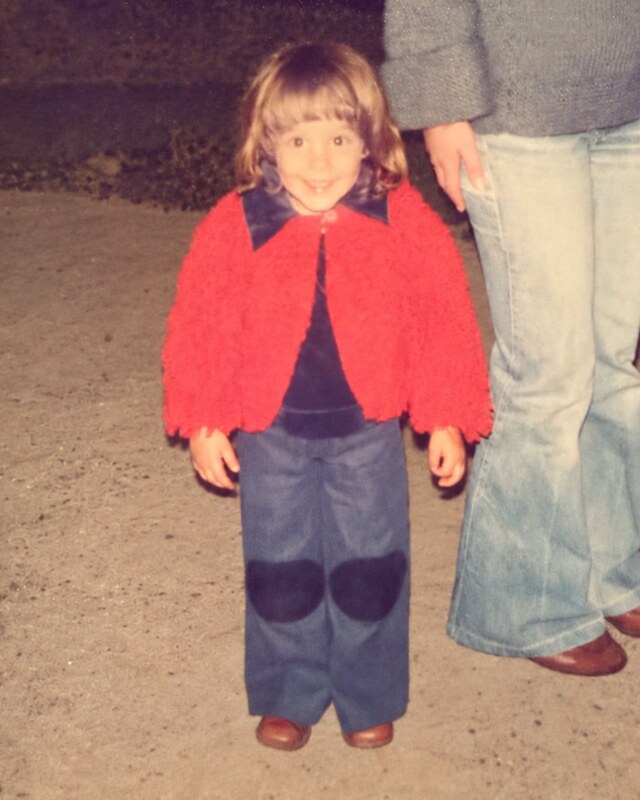
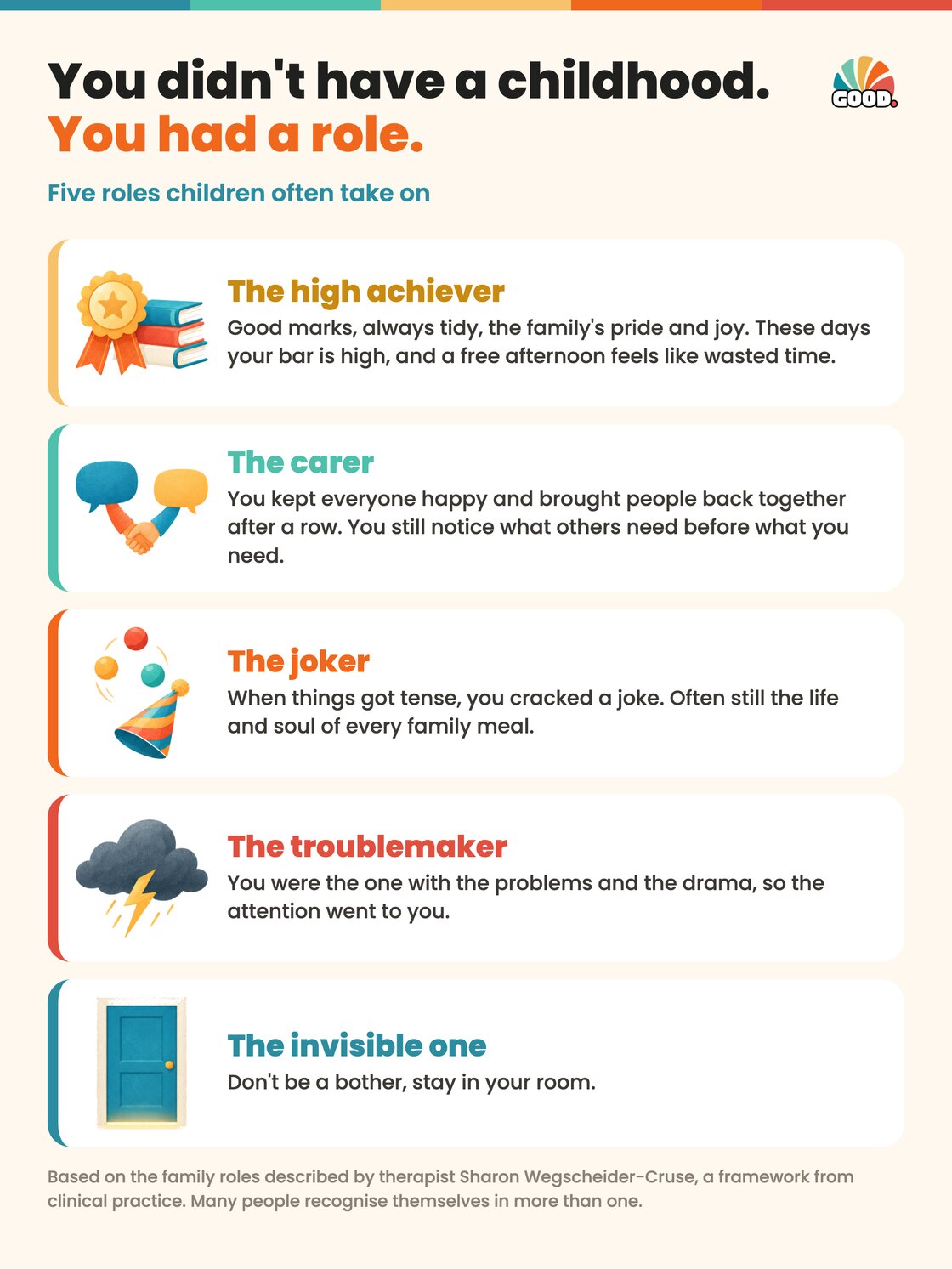
Me as a little girl Whenever I saw someone angry or upset, I'd try to distract them: being extra sweet, telling a little story, being cheerful. Or I'd show them something lovely I'd made, a drawing perhaps. That's where I learnt something I still carry with me: if I'm useful, I'm not too much. Then I have worth, and then I'm lovable. That's why I'm so often busy and so productive. I'm the balancer and the carer, and I'm grateful for what that role has given me. It's also made me successful. There's another side to it. I've always found it hard to wind down: doing nothing, relaxing, just being. I measured myself by what I did, and forgot that I'm already good enough without doing anything at all. And there's something else I've noticed. Whenever I join a group of people, I start analysing straight away. I watch who belongs with whom and how they treat each other. It happens all by itself, and I think it goes back to that time, when I was trying to work out how the people around me fitted together. Sometimes I make up whole stories about them in my head. Five roles you might recognise In the 1980s, the American family therapist Sharon Wegscheider-Cruse described a handful of roles that children often take on in a turbulent family. Her framework comes from clinical practice and has never been backed up by hard data, yet plenty of people recognise themselves in it straight away. The high achiever. Good marks, always tidy, the family's pride and joy. These days your bar is set high, and a free afternoon soon feels like wasted time. The carer. You kept everyone happy and brought people back together after a row. You still notice what someone else needs before you notice what you need. This one is me. The joker. When things got tense, you cracked a joke. In our house that was my brother, three years older than me. He's still the life and soul of every family meal. And if anyone in the family needs help, he's the first person we ask, because he always calmly finds a good way through. The troublemaker. You were the one with the problems, the trouble at school, the drama. That way the attention went to you, and away from what was going on at home. In the literature, this role is called the scapegoat. The invisible one. Don't be a bother, stay in your room. Lots of people played more than one. I know I did. A role like that was clever, because it gave you a place in your family.
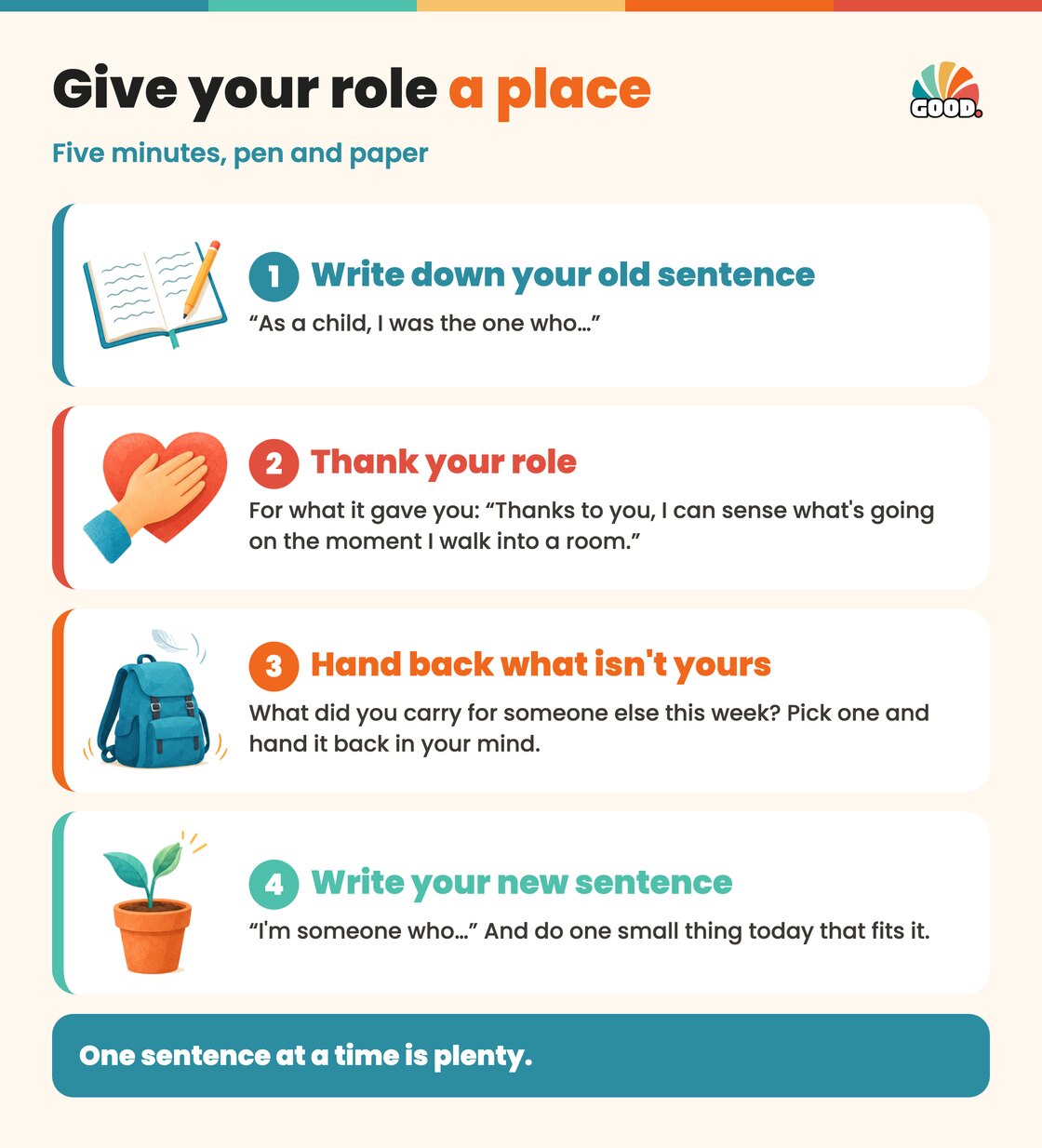
That role is still at work in me. In my own family I play the go-between too: when my children argue, I go back and forth between them until they're talking again. They're nearly grown up now, and that's a skill they can build themselves. I'm stepping out of the diplomat role. If one of them comes to me, only that one gets my advice, so they can do something themselves to sort it out. For me, that also means letting an argument happen, and not feeling responsible for someone else's feelings. Carrying a role takes energy Taking on a role often means carrying something that really belongs to someone else. You do it because, somewhere deep down, you think they can't manage on their own. In their research on stress at work and at home, Rob Cross and Karen Dillon call these small, everyday strains microstress: you barely notice them, yet they add up. Worrying about the people you love is on their list, whether you're caring for someone in practical ways or keep thinking: “If I don't do it, it'll go wrong.” If you grew up in a family with a lot of tension, it's easy to end up in the same kind of situation as an adult, in your own family or elsewhere. It's what you know, which is why it feels safe. These days, you can take a good look at the role you play, and learn to let it go. Why the past tense helps In an earlier newsletter I wrote about “that's just how I am” and how to put a sentence like that into the past tense. In studies by the Canadian psychologists Anne Wilson and Michael Ross, people judged an earlier version of themselves more harshly once it felt further away, and then saw themselves as someone who had grown. When you give your role a place in the past, you create exactly that distance: between who you had to be then and who you choose to be now. The first step is becoming aware of your role, and of the moments when you're carrying something that isn't yours. How to do it (five minutes)
If you've been working on a sentence since that newsletter about identity, stick with it. I'm still practising mine from a few weeks ago, because one sentence at a time is plenty. If you'd like to add a scent, try tea tree. In the book “Emotions & Essential Oils” it's called the oil of energetic boundaries: what's yours, and what belongs to someone else. Put 1 to 3 drops in your palm, rub your hands together, cup them over your nose and breathe in while you do step 3. And on busy days I take Adaptiv: it gives me a little more time between the trigger and my response, and I can act with a cooler head. Are you the useful one too? Then do something today that serves no purpose at all and simply feels good. I've started looking out for glinting light on my walks. When I spot it, I stop on purpose and really take it in. Especially now, with the autumn sun breaking through the leaves every so often, a play of light like that feels like a gift. It makes me happy! A quarter of an hour on the sofa with a book counts too, especially if it's not a management book.
One more thing for this week: promise yourself that you'll make time to play as a grown-up too. For me, that's skiing. It might sound mad to start in your fifties, but I'm loving it. And you: what did you love doing as a child, or what did you always want to do? Let me know, just hit reply. Let's go!
| ||||
You are receiving this email because you signed up for the 5 GOOD. minutes or downloaded something from GOOD. earlier. your-good-life.com · Privacy policy · Archive GOOD. · Tanja Thielen · Hollywoodlaan 35, 1325 HN Almere, Nederland KvK 42051602 · btw NL005457502B57 |



 Instagram
 Facebook
 LinkedIn