 | |||||||||||||
Hi, Sitting has been a real struggle for me. Until 2020 I was always on the go, travelling a lot and running workshops. Then, almost overnight, everything moved online and I spent hours on end in front of a screen. And I felt it. My energy dropped, and with less energy I wasn't as gentle or as cheerful as I used to be. My neck and joints ached, my eyes were tired, my skin suffered from all that screen time, and the scales crept up. The clocks went back last night, so from now on it'll be dark by half five, and the sofa will start looking very inviting. A good moment, then, to talk about what all that sitting does to your body.
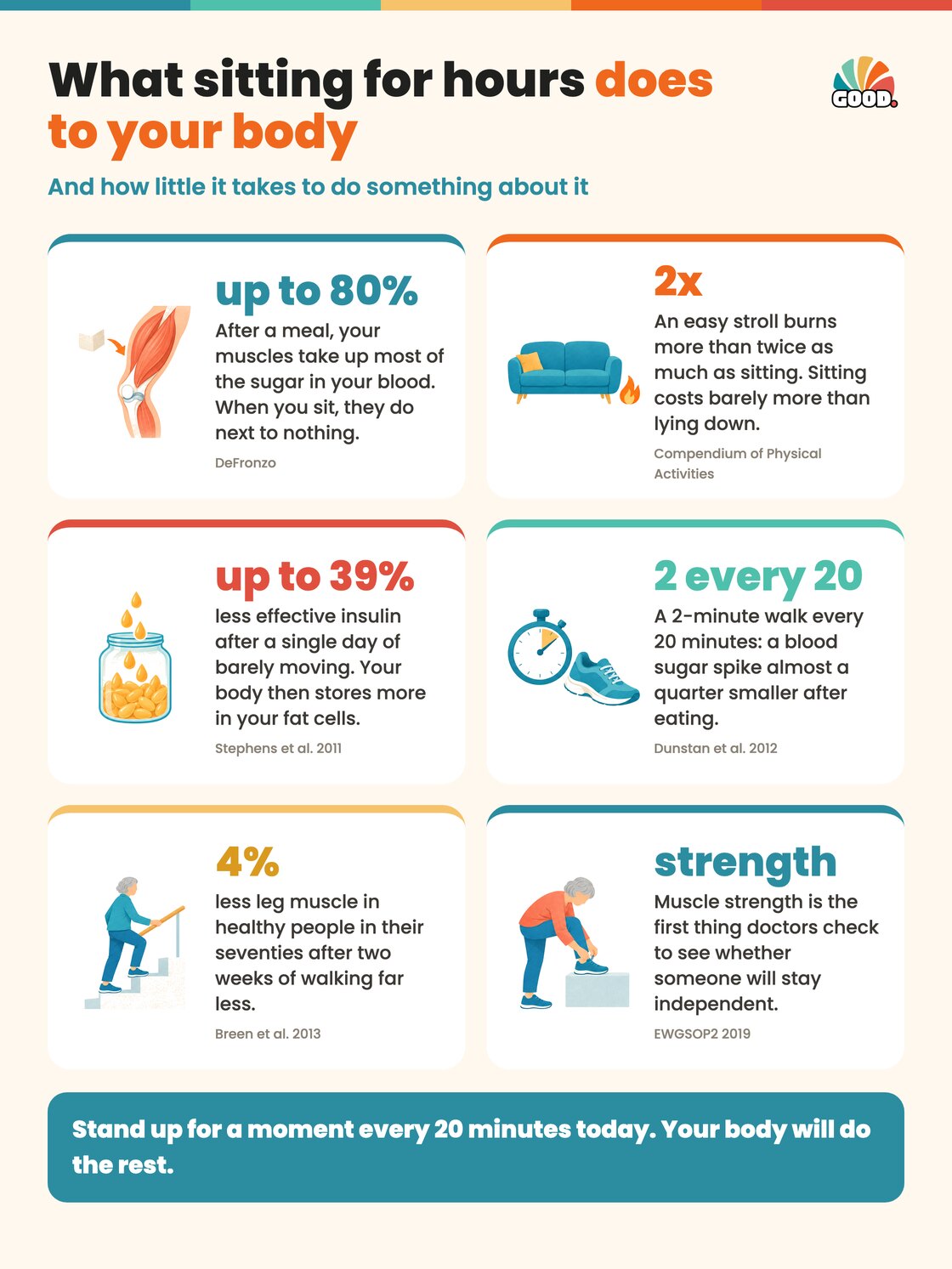
Your muscles are your biggest sugar users After a meal, most of the sugar in your blood is taken up by your muscles. But while you're sitting, the big muscles in your legs and bottom have next to nothing to do. More sugar stays in your blood, and your body has to release extra insulin to clear it. On top of that, sitting burns very little energy: barely more than lying down, and less than half of what you'd use on an easy stroll. Whatever you don't burn, your body stores in your fat cells. How hard this hits you varies from person to person, so I can't give you one neat percentage. I can show you the worst case, though. In a study by Stephens and colleagues (2011), healthy young adults spent a day barely moving. The next morning, their insulin was working up to 39% less well. After a single day! In practice, that means your body has to make more insulin to clear the same amount of sugar from your blood. And insulin is also your storage hormone: as long as there's a lot of it around, your body puts energy away in your fat cells instead of burning fat. If that happens day in, day out, your body gets steadily worse at handling sugar, and that's how type 2 diabetes starts.
The less muscle you have, the more you'll notice it. More muscle gives you a bigger buffer, and so does being one of those people who can never quite sit still. The good news is that you can build that buffer at any age. Your body adapts, even to sitting still Every long spell in a chair robs your body of the chance to do what it was made for. And your body is clever: it gives you what you ask of it. Ask for very little, and over time that's exactly what you'll get. In a study by Breen and colleagues (2013), healthy people in their seventies walked far less than usual for two weeks. By the end, their leg muscles had shrunk by almost 4%, and they responded a quarter less to a protein-rich meal. They were eating the same food, but their muscles were getting less out of it to stay strong. With the evenings drawing in, it's easy to lose a whole evening to the sofa, or a whole day to the iPad on your lap. I see it around me too, in people who've stopped working and spend their days in front of the telly or a tablet. And in the Netherlands, children aged 4 to 11 already sit for more than 7 hours a day on average, and teenagers for more than 10. Why it matters so much later on I say this with a lot of love. The older you get, the more this counts. Being strong enough to get up from a chair on your own, climb the stairs and carry your shopping decides how long you can go on living life your way. These days, muscle strength is the first thing doctors look at when they want to know whether someone is at risk of needing help (EWGSOP2, 2019).
Two minutes is enough In a study by Dunstan and colleagues (2012), adults got up for an easy two-minute walk every 20 minutes. After their meal, their blood sugar rose almost a quarter less than when they stayed in their seats. A smaller spike means your body needs less insulin and stores less, and you're less likely to get an energy dip or cravings afterwards. Hoping to lose a few kilos, or to feel a bit more toned again? Then here's some good news: every time you stand up, you're helping your body store less. No hour at the gym required. For work, my site has 12 moves you can do at your desk, a few of which nobody will even notice, plus a tracker. For home, there's this week's gift.
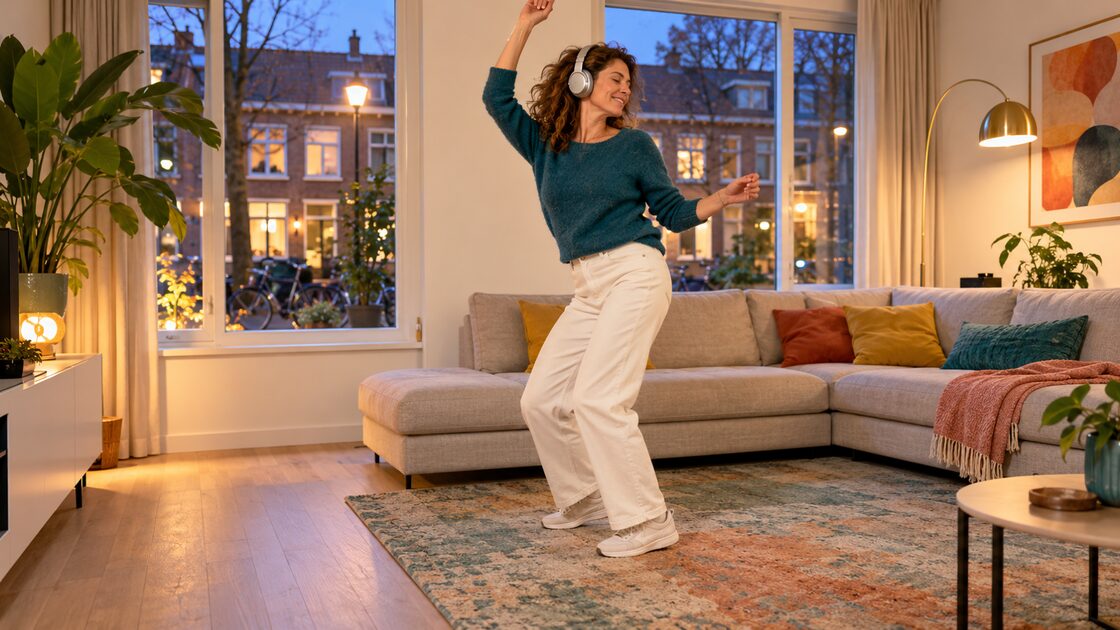
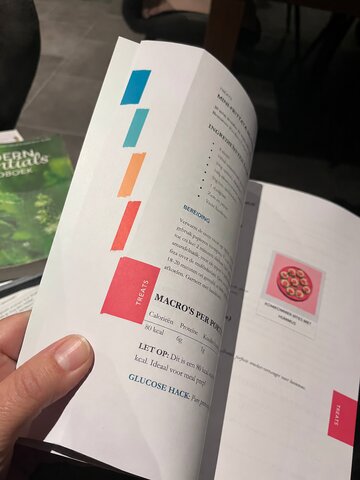
Stand up now, before you open your next email, and get up out of your chair ten times without using your hands. Not quite there yet? Use your hands for now and do it a few times a day, then try again without them in a week's time. Your body is made to move, and the more chances you give it, the more energy you'll have and the better you'll feel. Let's go! Look what Conny's got!
Tell people on Amazon Already got GOOD.21, old edition or new? Then I'd love you to leave a review. People who are on the fence read what other readers say first, and your experience will win them over far more than my own enthusiasm ever could. One sentence is plenty: your favourite recipe, something you've learnt, or what you've noticed since you started eating with your glucose in mind. ⭐️⭐️⭐️⭐️⭐️ Pick your stars and you'll be done before the kettle boils... and you'll make my week, yay!
| |||||||||||||
You are receiving this email because you signed up for the 5 GOOD. minutes or downloaded something from GOOD. earlier. your-good-life.com · Privacy policy · Archive GOOD. · Tanja Thielen · Hollywoodlaan 35, 1325 HN Almere, Nederland KvK 42051602 · btw NL005457502B57 |



 Instagram
 Facebook
 LinkedIn