Your GOOD. strategy
Anyone heading somewhere needs a starting point first. That is what you capture today. Not to judge yourself; it is simply where you stand right now, and from here it goes forward. No calorie counting, no athlete-level training schedule. This sheet takes you through three steps:
Capture 4 things today. Takes fifteen minutes, including the most entertaining fitness test you have ever done on a stair step.
Pick one goal. Not three. The weekly rhythm is already filled in; you only choose what suits you.
Follow it for 4 weeks and tick the boxes. Then simply keep going; somewhere along the way you notice it starts running on its own.
1Capture your starting point today
 Waist
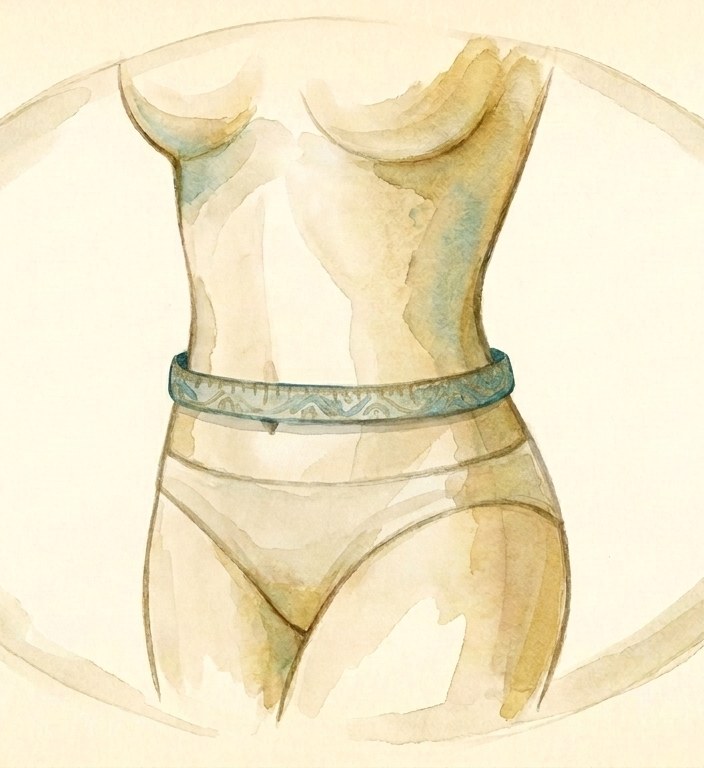
WaistMeasure on bare skin, exactly at navel height, breathing out and relaxed, tape level all the way round. Measure twice at the same time of day and note the average. This is your most important number: if your waist keeps getting smaller over the coming weeks, you are very likely losing fat, even when the scales do nothing.
Today: ______ cm
Take a sturdy step or the bottom stair. Step up and down for 3 minutes in a steady rhythm: up-up-down-down, one footstep per tick (free metronome app at 96 ticks). Straight afterwards, count your heartbeat for 15 seconds and multiply by 4. Sit down for 1 minute and count again. The bigger the difference, the better your recovery: more than 25 beats is excellent, 15 to 25 good, 10 to 15 moderate, under 10 deserves attention. Use the same step every time and compare with yourself above all. If you feel dizzy, short of breath or any chest pain: stop at once.
After the test: ______ · after 1 min: ______ · difference: ______
If your phone counts steps, note an ordinary weekday. No counter? Estimate it: 500 metres (once round the block, to the bakery and back) is roughly 650 steps. How many stretches like that do you walk in a day?
______ steps or ______ x round the block
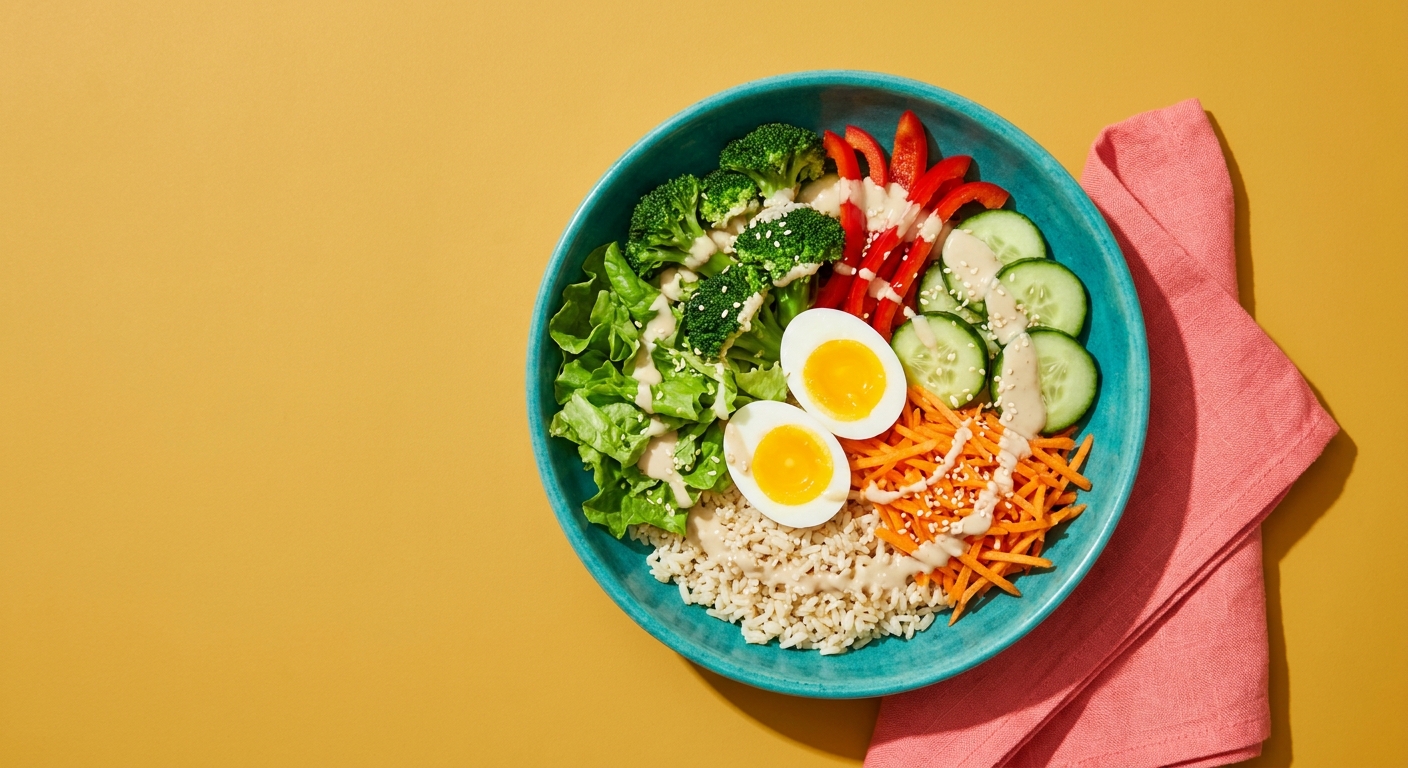
Look at your 3 meals today. In how many was a protein source the centre of the plate? The list on page 4 shows what counts.
Today: ______ of 3 meals
Your plan and your strategy
2Pick one goal (really just one)
 Stronger
Strength training twice a week, 20 to 30 minutes, plus a daily walk. You make it heavier in small steps: one repetition more than last week, or a small weight added. No idea where to start? Page 3 holds a complete home circuit.
 Fitter
A daily walk, plus intervals twice a week in whatever form suits you: 30 seconds as briskly as you can (on a bike, the stairs or simply walking faster), then rest until your breathing settles, 4 to 6 times. Japanese walking counts too: 3 minutes brisk, 3 minutes easy, for half an hour (how it works: your-good-life.com/blog). Strength training once a week keeps the base in place.
 Leaner
Strength training twice a week, a daily walk and a protein source with every meal. Cardio is welcome if you enjoy it, but do not expect the main result from it: that comes from your muscles (they burn energy even at rest) and from your daily movement. Desk job? Stand up every half hour and move for 2 minutes (why that matters so much: your-good-life.com/blog).
Strength training, but where? On the machines at a gym such as Basic-Fit (www.basic-fit.com): they guide the movement, so you can safely go heavier. If you are a beginner, book one session with a personal trainer first and have a circuit put together for you; it is the cheapest injury insurance there is.
3Tick off your 12 weeks
I start on: ______________ · After 4 weeks (on ______________) I take first stock; after 12 weeks I see the full difference.
| Week | Strength | Walk (15+ min) or intervals | Water (daily goal) | Tape measure |
|---|---|---|---|---|
| 1 | — | |||
| 2 | ______ cm | |||
| 3 | — | |||
| 4 | ______ cm | |||
| 5 | — | |||
| 6 | ______ cm | |||
| 7 | — | |||
| 8 | ______ cm | |||
| 9 | — | |||
| 10 | ______ cm | |||
| 11 | — | |||
| 12 | ______ cm |
Walk and water: one box per day (7 days). Strength training: two boxes per week. You work out your daily water goal on page 5.
 Week 12 · the new you
The home circuit
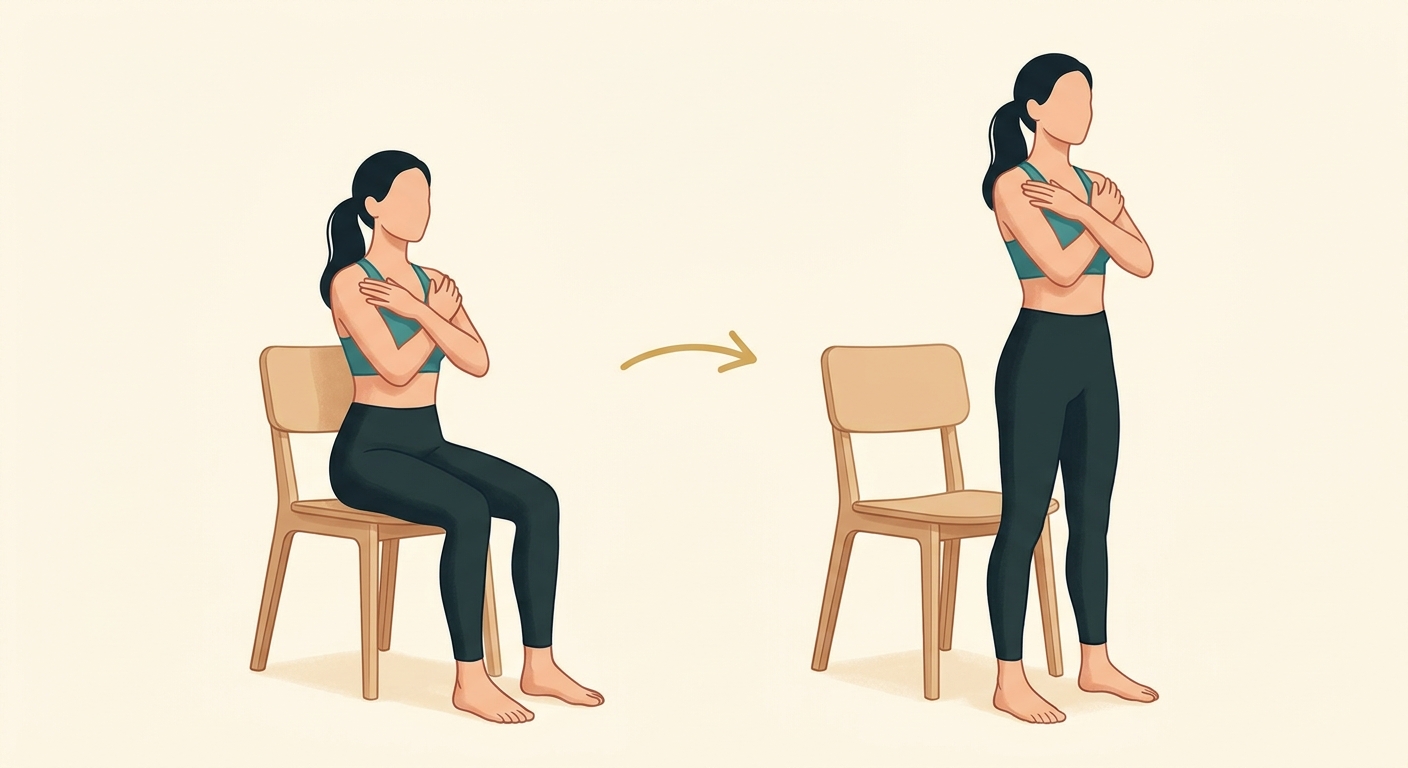
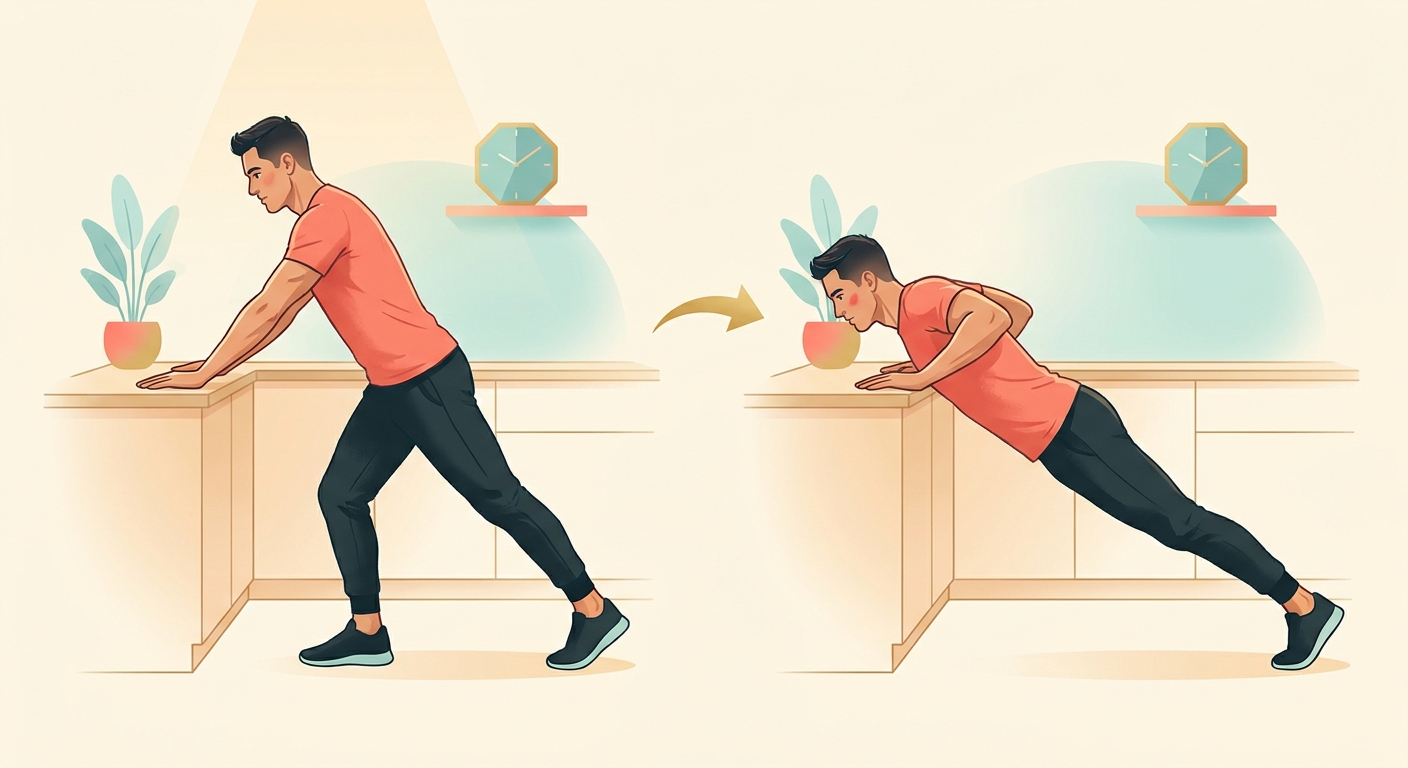
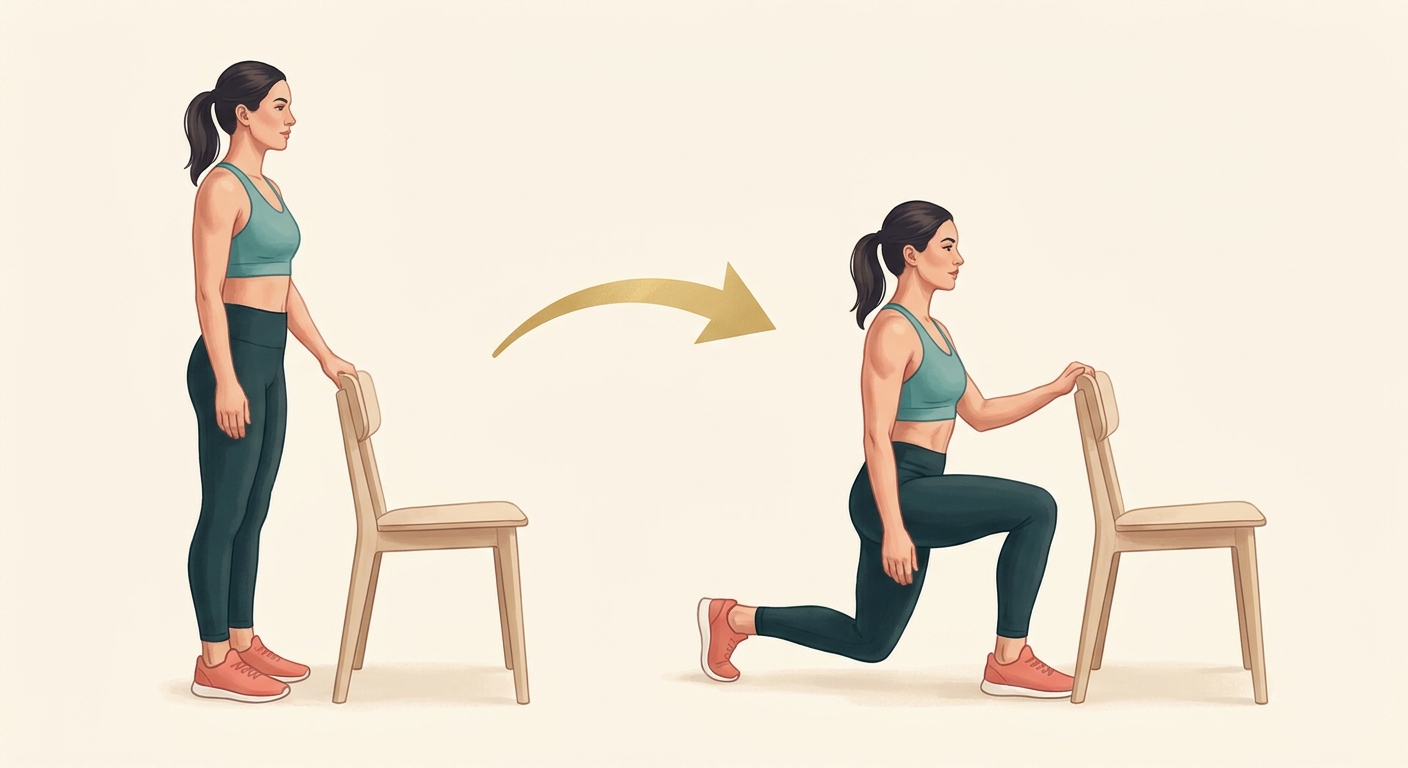
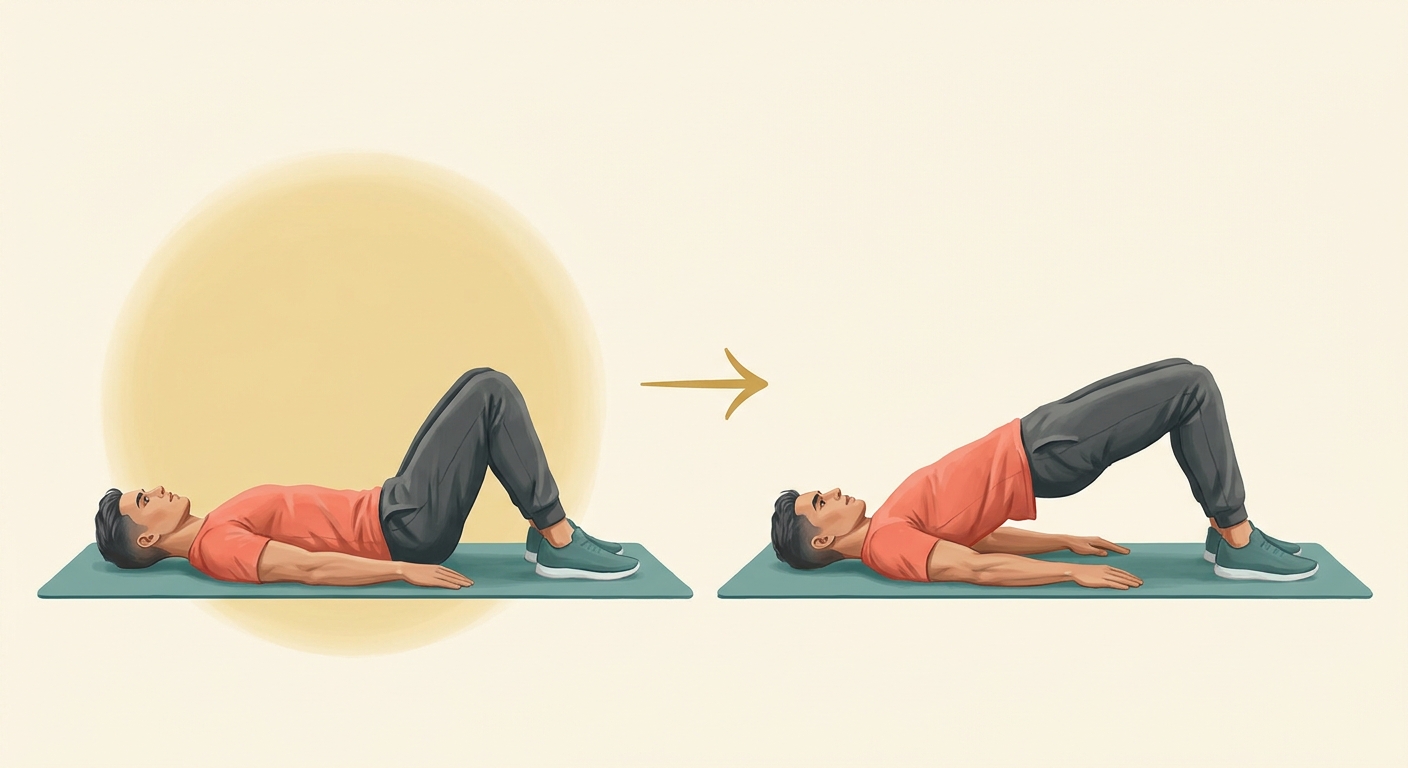
This circuit is your starter version for home; every exercise has a lighter and a heavier form, so choose what suits you today. Per round: exercises 1, 2 and 4 are done 10 to 12 times, the lunge 10 times per leg, and the plank is held for 20 to 30 seconds.
 →
→
 →
→
 →
→
 →
→
| Exercise | How to do it, with love for your joints |
|---|---|
1. Standing up from a chair (squat) | Sit on a sturdy chair, feet hip-width, arms crossed over your chest. Stand up without using your hands, then sit back down so gently you barely hear the chair. That is 1 repetition. Lighter: push off with your hands on your thighs. Heavier: only touch the chair briefly; later, hold weights. |
2. Pushing against the worktop (push-up) | Hands on the worktop, feet a good step back, body in one straight line. Bend your arms until your chest almost touches the top, then push back. Lighter: hands against the wall instead of the worktop. Heavier: hands ever lower: table, sofa, and finally a mat, first on your knees, then on your feet. |
3. The lunge | Stand tall with one hand on the back of a chair. Take a big step forward and let your back knee sink calmly towards the floor, as far as today allows. Push yourself back. Alternate, 10 per leg. Lighter: a smaller step, less depth; the chair back stays your friend. Heavier: without support; later, hold weights. |
4. The bridge | Lie on your back on a mat (or on your bed if the floor feels too far away), knees bent, feet flat. Push through your heels and lift your hips until knees, hips and shoulders form one line. Hold for two counts, lower slowly. Lighter: lift your hips just a few centimetres; that trains too. Heavier: extend one leg while lifting. |
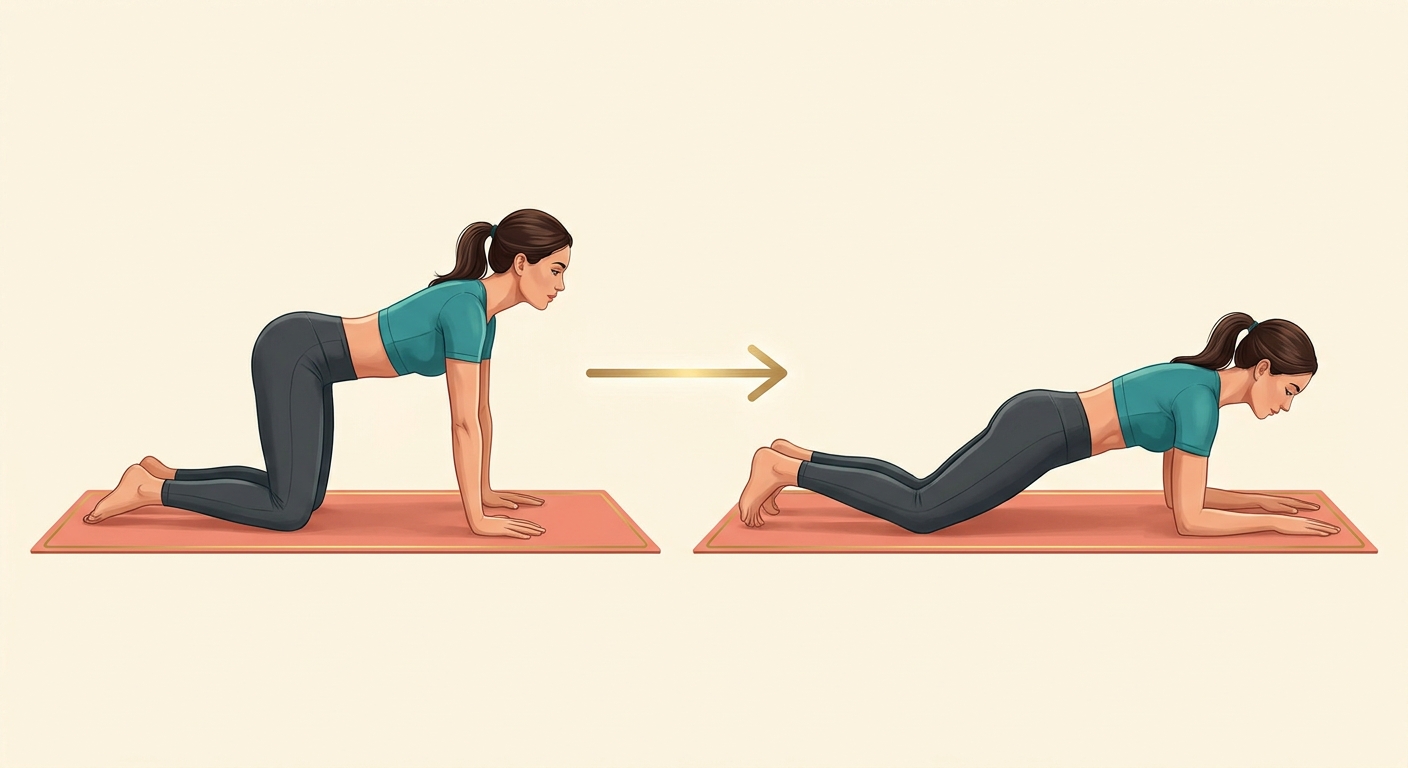
5. The plank | Start on hands and knees. Lower onto your forearms and slide your knees back until your body is one straight line from head to knees. Brace your belly and hold for 20 to 30 seconds, breathing normally. Lighter: hold for less time, more often. Heavier: on your toes instead of your knees; 5 seconds longer each week, up to 1 minute. |
Protein: where to find it
Guideline for healthy adults doing strength training: 1.6 to 2.2 grams of protein per kilo of body weight per day (if you have a kidney condition or medical protein advice, check with your doctor first). Build every meal around one source from this list, and mind the right-hand column, because not every protein source is a lean one.
| Source (portion) | Protein | Calories |
|---|---|---|
| White fish such as cod, 150 g | 26 g | ± 120 kcal |
| Protein shake, 1 scoop (30 g) (v possible) | 23 g | ± 120 kcal |
| Mature cheese, reduced-fat, 40 g (v) | 13 g | ± 135 kcal |
| Unsweetened soya yoghurt, 250 g (v) | 10 g | ± 135 kcal |
| Low-fat quark or skyr, 250 g (v) | 27 g | ± 150 kcal |
| 2 eggs (v) | 13 g | ± 155 kcal |
| Chicken breast, cooked, 100 g | 30 g | ± 165 kcal |
| Lean beef such as steak, 100 g | 28 g | ± 170 kcal |
| Pork tenderloin, cooked, 100 g | 27 g | ± 175 kcal |
| Tofu, 150 g (v) | 19 g | ± 180 kcal |
| Lentils, cooked, 200 g (v) | 18 g | ± 230 kcal |
| Peanut butter, 3 tablespoons (50 g) (v) | 12 g | ± 300 kcal |
| Mixed nuts, 50 g (v) | 10 g | ± 300 kcal |
“It is high in protein” is true on paper, but every gram comes with a lot of calories attached. For the same 300 kcal, quark delivers over 4 times as much protein as peanut butter. Peanut butter and nuts are still fine as a flavour maker (1 tablespoon), just not as the meal’s protein source. Vegetarian? Combine quark, eggs, mature cheese, soya yoghurt, tofu, lentils and a shake; that gets you to the guideline without any tricks.
Peckish between meals? My 2-minute shake
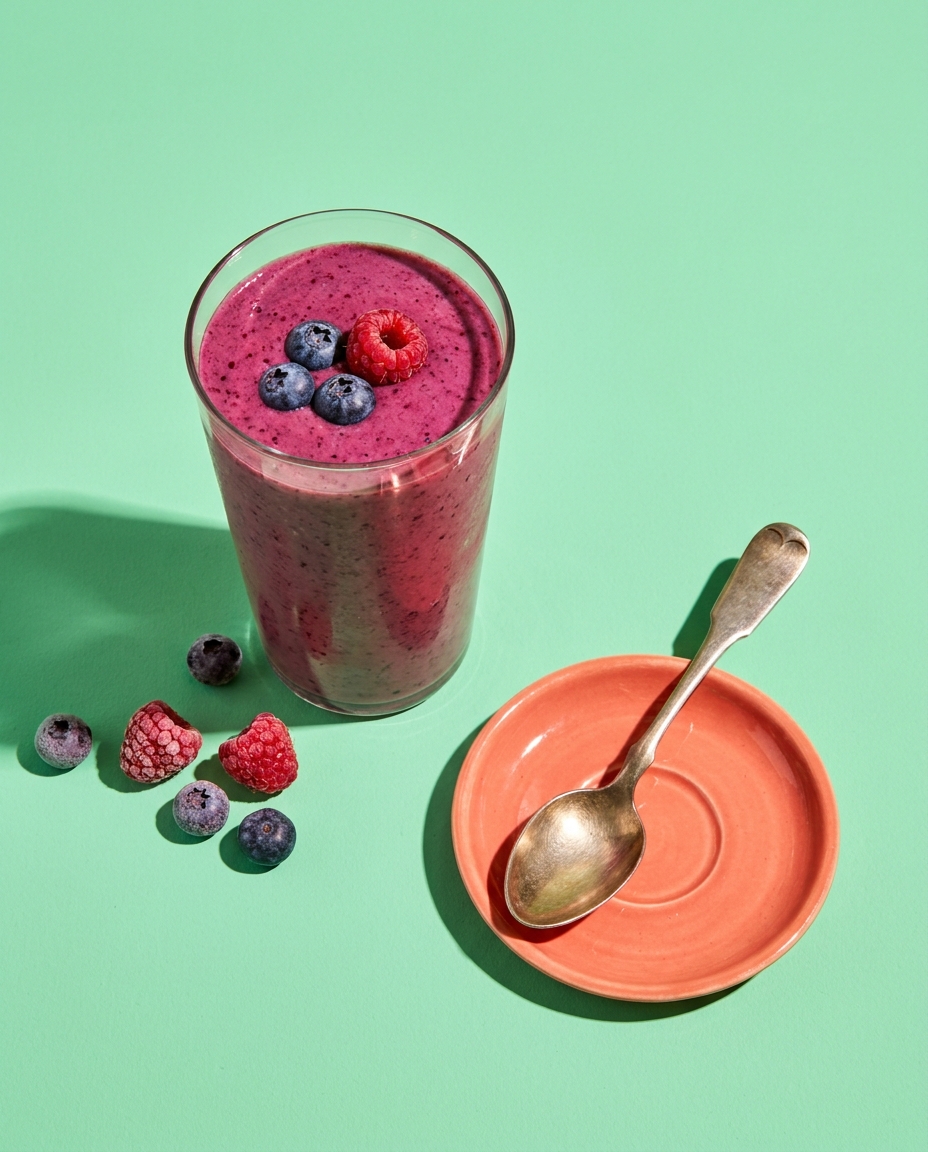
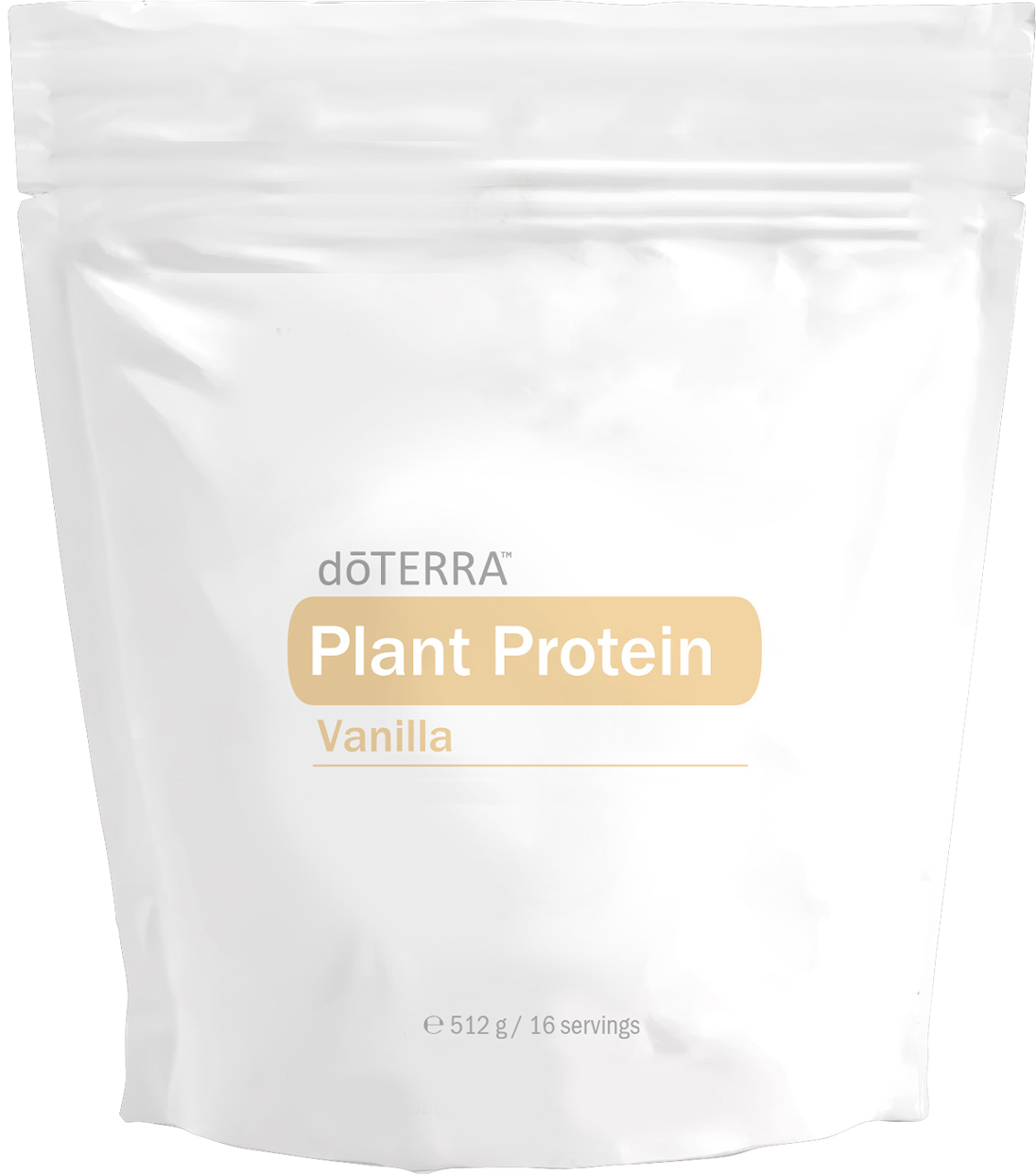
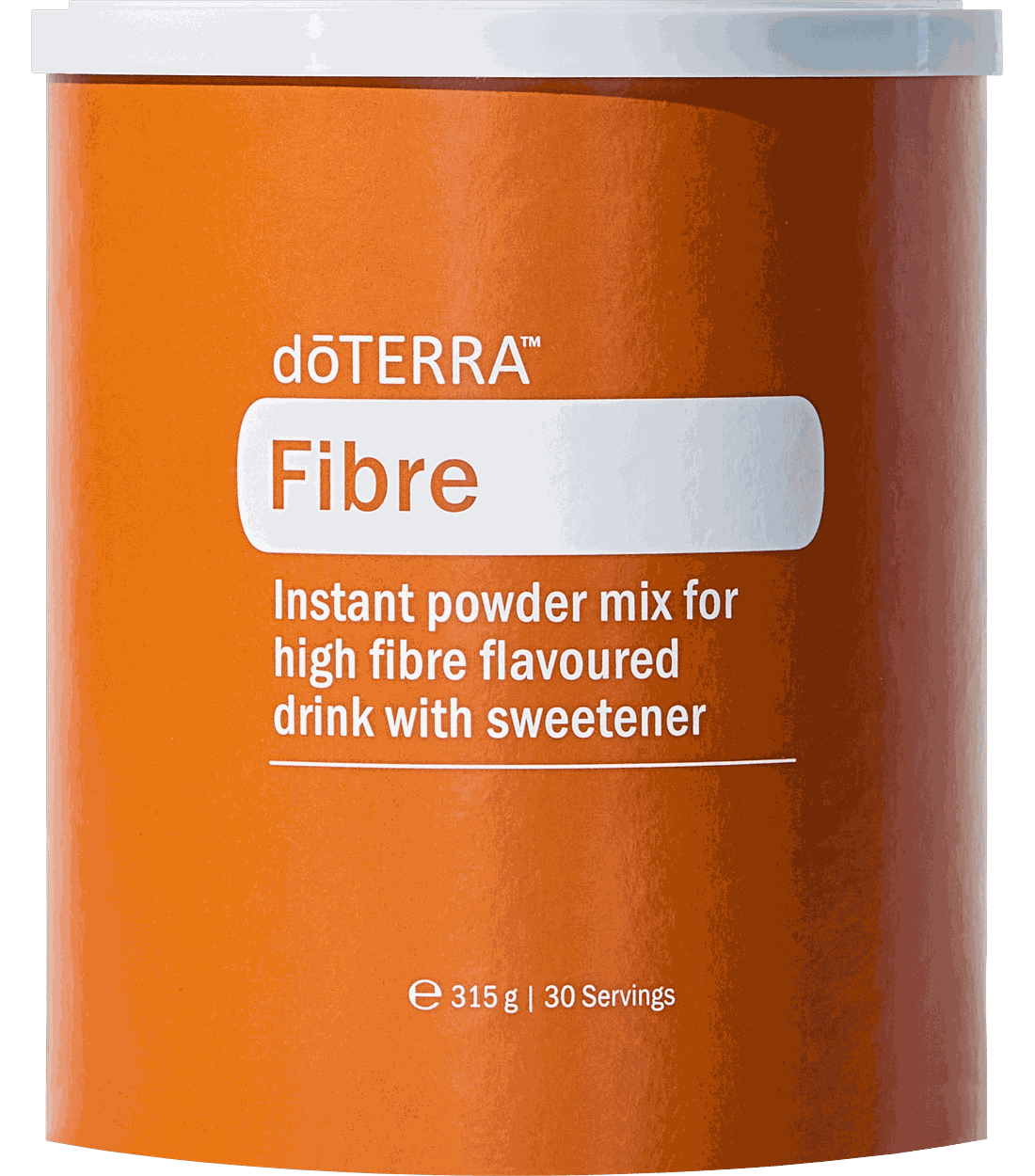
For the moment the biscuit tin starts calling: 1 scoop of protein powder (vanilla, mine: your-good-life.com/supplements/protein), 250 ml unsweetened soya milk or semi-skimmed milk, a handful of frozen berries and a spoonful of fibre stirred in (I use the Fibre myself: your-good-life.com/supplements/fibre). Everything in the blender, 30 seconds, done.
A good 25 grams of protein for roughly 220 kcal (your powder’s label is what counts), extra filling thanks to the fibre, and the hunger is genuinely gone rather than quiet for ten minutes.